Complete Overview of Spring Boot
Spring Boot is an open-source, microservice-based framework used to create stand-alone, production-grade Spring-based applications with minimal configuration. It is a project within the larger Spring ecosystem and aims to simplify the development of new Spring applications.
Why Spring Boot if There is Already Spring!
Spring is widely used for creating scalable applications. In the case of web applications, Spring provides Spring MVC which is widely used to create scalable web applications. But the major drawback of spring projects is that configuration is really time-taking and can be a bit tedious for the new developers. To make the application production-ready takes some time in spring. And the solution for this is Spring Boot.
Spring Boot is created on the top of the spring and includes all the features of spring. And is becoming a favorite of developers these days because of its rapid production-ready environment which allows the developers to directly concentrate on the logic instead of struggling with the configuration and setup.
What is Spring Boot?
Spring Boot is an open-source Java framework designed to simplify the development of Java-based web applications. It is built on top of the popular Spring framework and provides a convention-over-configuration approach, which allows developers to quickly create production-ready applications with little effort.
The primary goal of Spring Boot is to remove boilerplate code and complex configurations that developers often encounter when building web applications with the Spring framework. It comes with a set of opinionated defaults and auto-configuration capabilities, which reduces the time and effort needed to set up a Spring web application.
It is very easy to create stand-alone, production-grade Spring-based Applications that you can “just run“
Features of Spring Boot
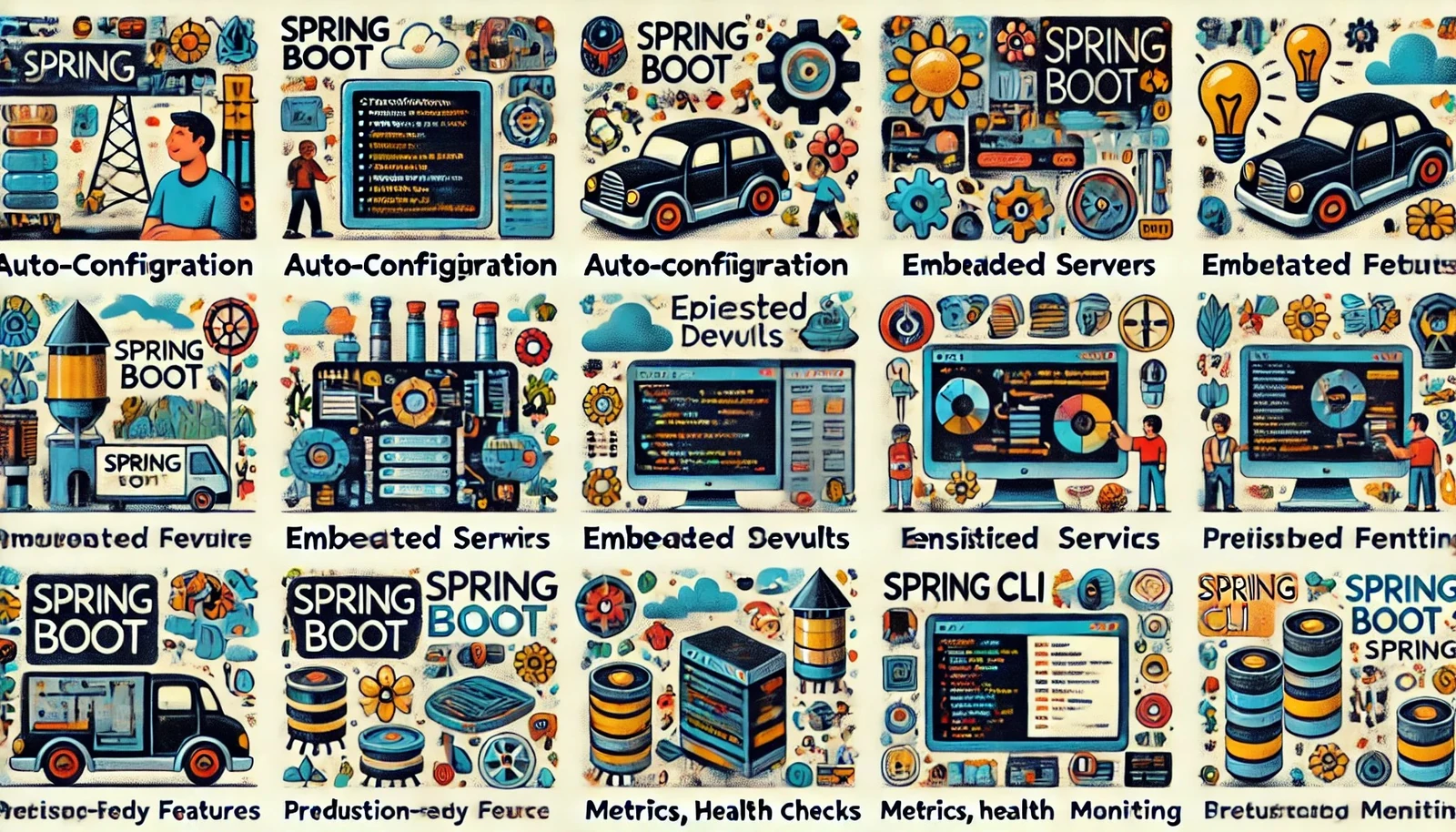
Auto-Configuration: Automatically configures your Spring application based on the dependencies you have added. For example, if H2 database is in the classpath, Spring Boot automatically sets up an in-memory database.
Standalone: Spring Boot applications can run independently without needing an external application server. They can be run from the command line using java -jar.
Embedded Servers: Spring Boot comes with embedded servers such as Tomcat, Jetty, and Undertow, which makes it easy to develop and test web applications.
Opinionated Defaults: It provides sensible defaults out-of-the-box, reducing the need for boilerplate configuration.
Production-Ready Features: Includes a range of non-functional features, such as metrics, health checks, and externalized configuration, essential for running applications in production.
Spring CLI: Command-line tool that helps to bootstrap a new project with Spring Boot.
Starter Dependencies: Spring Boot provides a wide range of "starter" dependencies. These are pre-configured dependency bundles. These starters simplify dependency management by providing a set of dependencies for specific functionalities such as data access, security, testing, etc.
Core Concepts of Spring Boot
Spring Boot Starters: Starters are a set of convenient dependency descriptors you can include in your application. For example, spring-boot-starter-web includes everything to start a web application.
Spring Boot AutoConfigurator: Auto-Configuration is a mechanism that automatically configures Spring applications based on the dependencies in the classpath.
Spring Boot Actuator: Provides production-ready features such as monitoring, metrics, and health checks.
Why You Should Learn Spring Boot
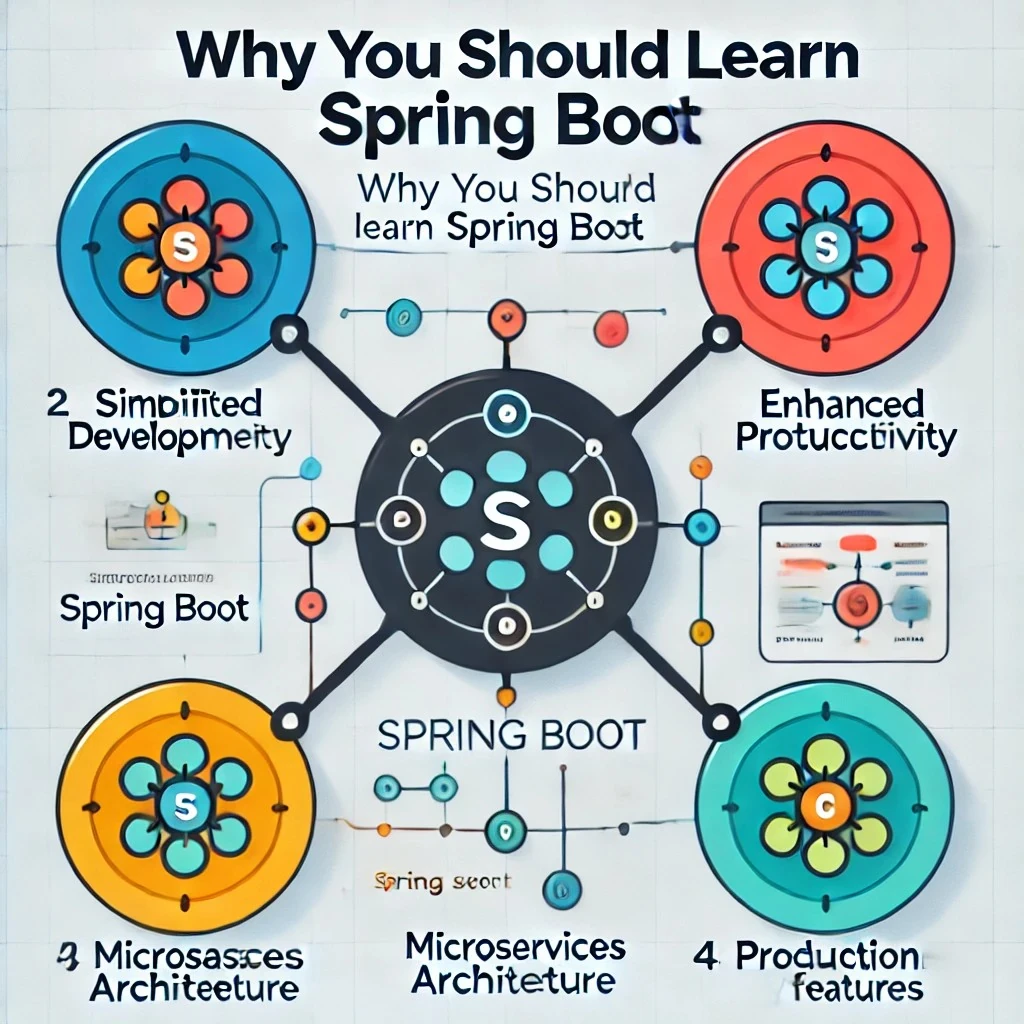
Simplified Development
Auto-Configuration: Automatically configures Spring applications based on the dependencies present in the classpath, reducing the need for extensive XML configuration.
Starter POMs: Provides a variety of starter dependencies that simplify adding necessary libraries and frameworks.
Enhanced Productivity
Reduced Boilerplate Code: Minimizes the amount of boilerplate code developers need to write, enabling faster development cycles.
Embedded Servers: Built-in support for embedded servers like Tomcat, Jetty, and Undertow means you can run your applications directly without needing an external server setup.
Microservices Architecture
Modular Development: Ideal for building microservices, which are small, modular services that can be developed, deployed, and scaled independently.
Spring Cloud Integration: Seamlessly integrates with Spring Cloud for building robust, scalable microservices architectures.
Production-Ready Features
Spring Boot Actuator: Provides out-of-the-box monitoring and management features, including health checks, metrics, and environment information.
Externalized Configuration: Supports externalized configuration to easily manage different environments (development, staging, production) using properties or YAML files.
Strong Community Support
Extensive Documentation: Well-documented and supported by a vibrant community, making it easier to find resources, tutorials, and troubleshooting tips.
Ecosystem Integration: Part of the larger Spring ecosystem, ensuring compatibility and integration with other Spring projects and third-party libraries.
Learning Curve
Ease of Learning: Compared to other Java frameworks, Spring Boot has a gentle learning curve due to its opinionated defaults and extensive documentation.
Educational Resources: A wealth of learning resources, including books, online courses, and community forums, are available to help you get started.
Career Advancement
Industry Demand: Knowledge of Spring Boot is highly valued in the job market, especially for roles in backend development and enterprise application development.
Versatile Applications: Enables you to develop a wide range of applications, from simple web applications to complex enterprise solutions.
Modern Development Practices
RESTful APIs: Simplifies the development of RESTful web services, a common requirement in modern web applications.
Reactive Programming: Supports reactive programming with Spring WebFlux, allowing you to build responsive and resilient applications.
DevOps and CI/CD Integration
Containerization: Easily containerize Spring Boot applications using Docker, facilitating smoother deployments and scaling.
CI/CD Support: Compatible with continuous integration and continuous deployment (CI/CD) pipelines, streamlining the development workflow.
Scalability and Performance
Efficient Resource Management: Designed to efficiently manage resources, ensuring that applications can scale seamlessly with increasing load.
Optimized for Performance: Fine-tuned for performance, making it suitable for high-traffic applications.
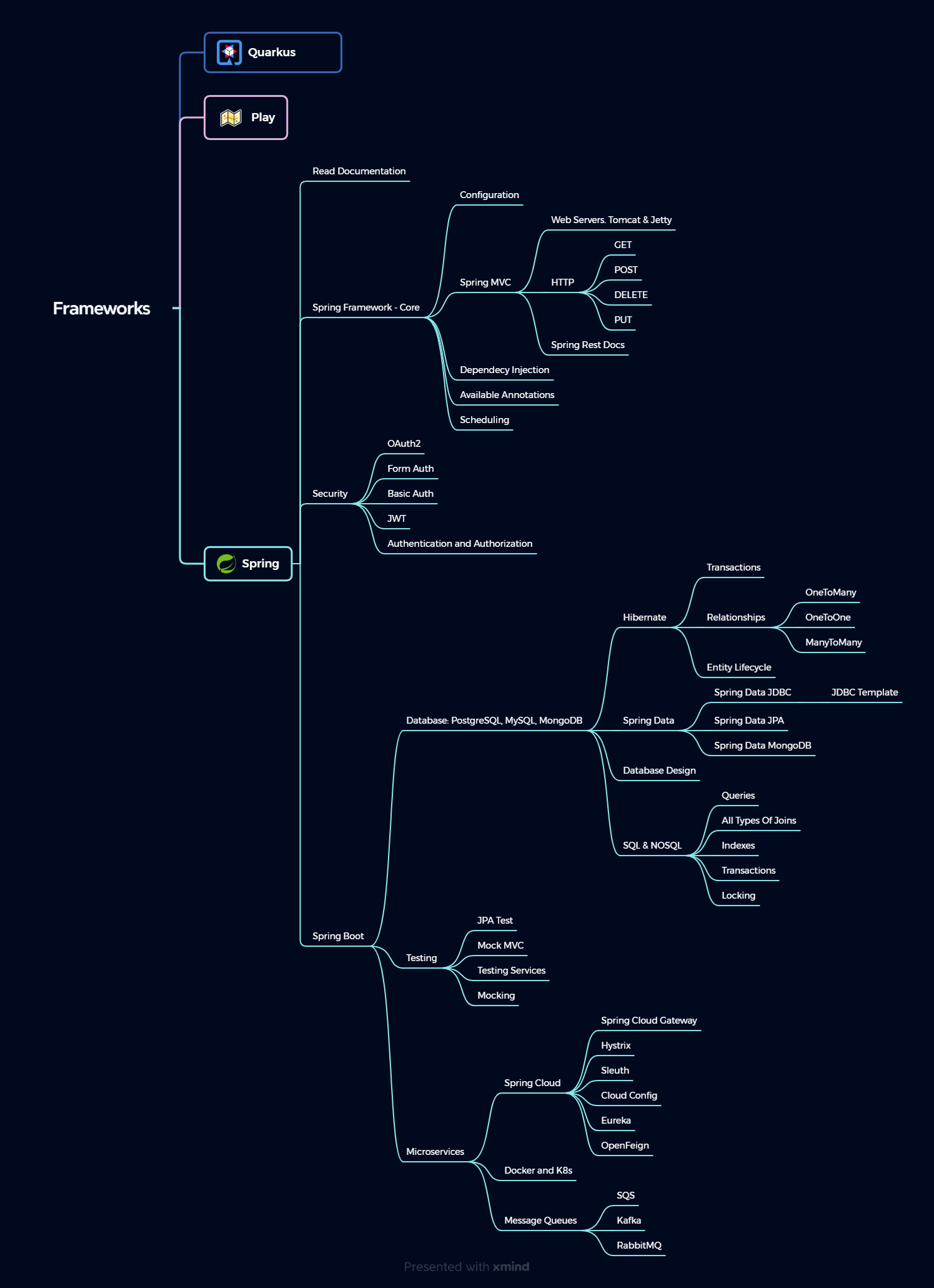
Best Way to Master Spring Boot – A Roadmap to Learn